Information
Why Rainwater Harvesting Needs to be Considered Early
Did You Know Rainwater Harvesting is Now a Priority in Developments?
Across the built environment, the conversation around surface water management has shifted decisively. Rainwater harvesting is no longer a “nice to have” sustainability add-on; it is now central to how developments are expected to manage water. Recent changes to SuDS (Sustainable Drainage Systems) guidance place rainwater harvesting and water reuse firmly at Priority 1 in the drainage hierarchy — and that change is significant.
Traditionally, surface water strategies focused on attenuation: slowing rainwater down and releasing it gradually to drains or watercourses. While this approach still has a role, updated SuDS guidance now makes it clear that the best form of drainage is no drainage at all. If rainfall can be captured, reused, and prevented from entering the drainage network in the first place, it delivers the greatest environmental and infrastructure benefit.
SuDs Guidance Changes are Driving the Intake in Water Reuse
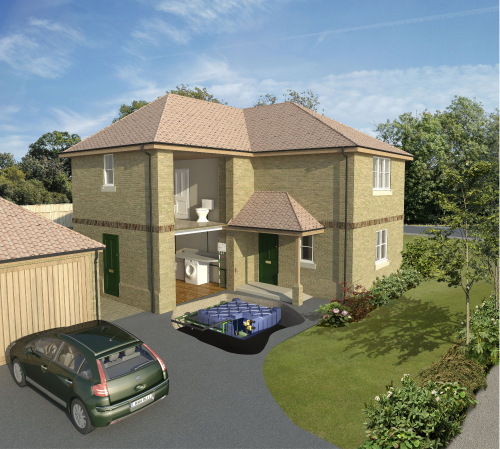
Priority 1 essentially asks a simple question at the earliest design stage: Can this water be used rather than disposed of? Rainwater harvesting answers that question directly. By collecting roof runoff and reusing it for non-potable demands such as WC flushing, irrigation or vehicle washing, developments significantly reduce both potable water demand and surface water discharge volumes.
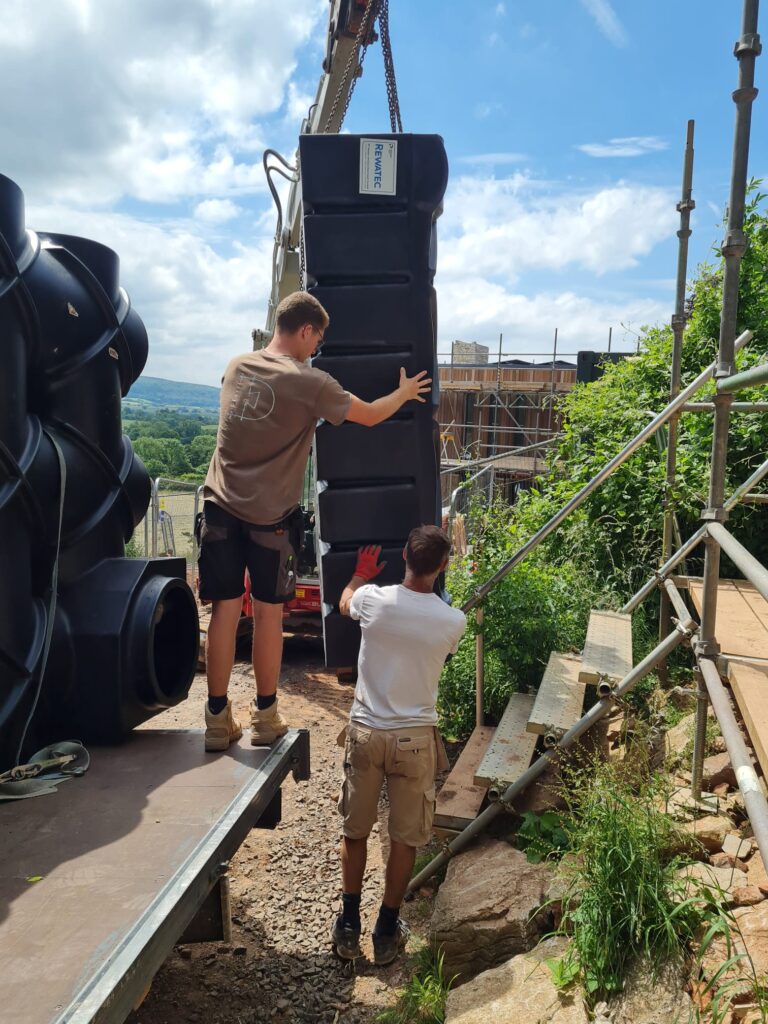
This shift matters because many projects struggle to achieve compliance when rainwater reuse is introduced late. Once drainage layouts, tank sizes and plant space are fixed, retrofitting a harvesting system becomes more complex and less cost-effective. Early consideration, by contrast, allows rainwater harvesting to work with SuDS rather than alongside it. Storage can be dual-purpose, attenuation volumes can be reduced, and systems can be sized accurately to deliver measurable benefits.
Rainwater Harvesting/Water Reuse is Expected by Local Authorities
From a planning and regulatory perspective, this proactive approach is increasingly expected. Local planning authorities and lead flood authorities are looking for clear evidence that Priority 1 options have been explored before attenuation or discharge solutions are proposed. Rainwater harvesting provides a robust, demonstrable response.
How Can We Help You?
At Rainwater Harvesting Ltd we see rainwater harvesting not just as a compliance tool, but as an opportunity. Well-designed systems reduce infrastructure pressure, cut operational water costs, and future-proof developments against tightening water resources and regulation. By engaging early, our clients consistently achieve simpler approvals, better-performing SuDS strategies, and tangible sustainability outcomes.
In short, rainwater harvesting is no longer about doing more — it’s about doing things in the right order. And that order now starts at the very top of the SuDS hierarchy.
If you would like to know more about Rainwater Harvesting and how you can meet planning stipulations you can reach a member of the team by filling out our contact form or alternatively you can give us a call on 01733 405 111.
About Author